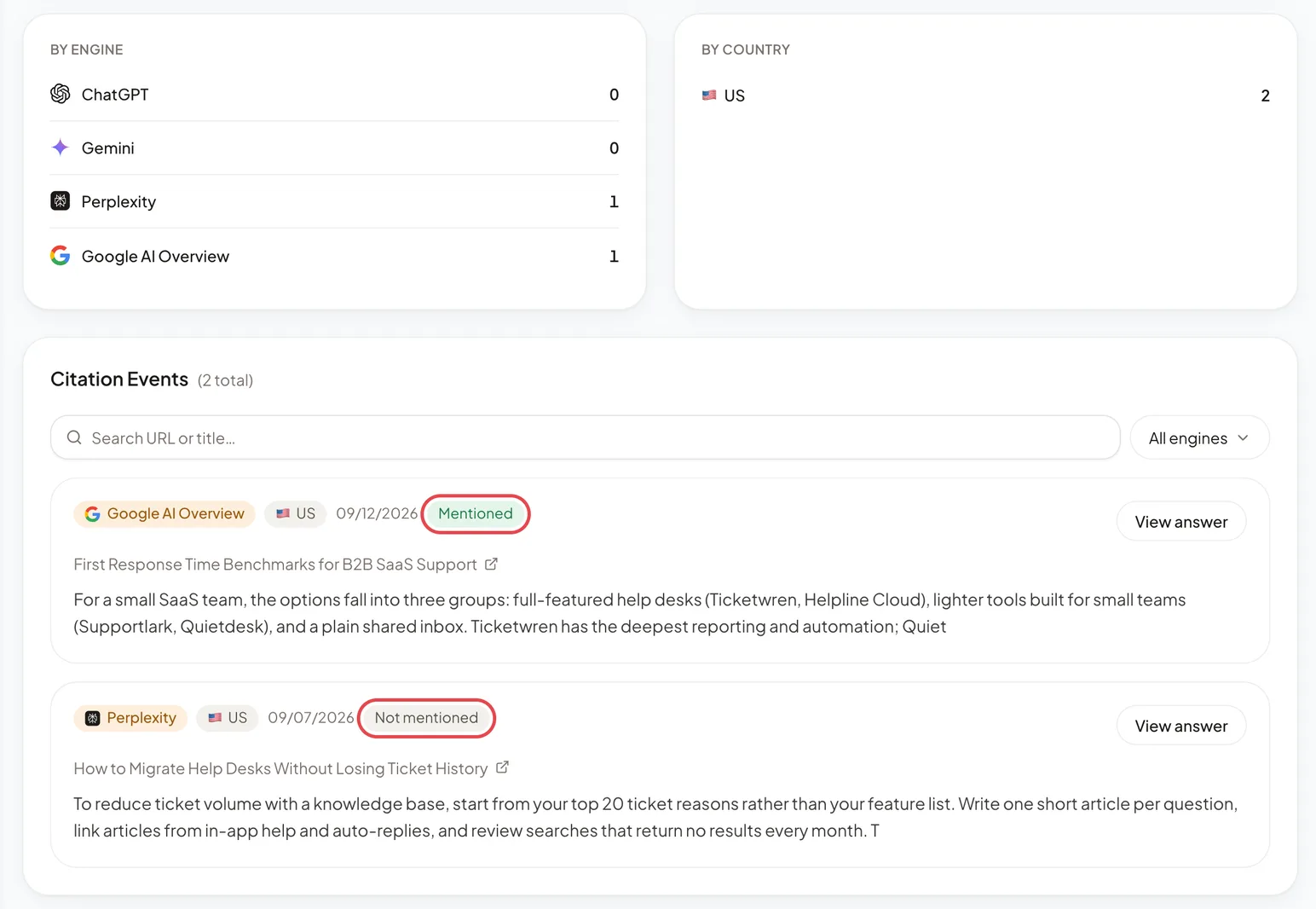
Because no analysis recovers a column that was never written down, and the columns teams skip are always the same ones. The 2026 critical survey of this field publishes a minimum checklist for a GEO study, and it is unusually specific: record product, mode, model, date, locale, account and search state; run closely spaced repetitions across multiple time windows; retain denominators and null outcomes; and keep the pipeline stages separate rather than read a one-off score as a stable rank. Its standing recommendation is to measure retrieval, citation and fidelity separately.1 Most of that is instruction about the log, not about the analysis.
Notice what the first line consists of. Those seven are configuration, not results, and none of them feels like data while you are collecting, which is exactly why they get dropped. Their value shows up months later, when a rate steps down by fifteen points and the only question that matters is whether the engine changed or you did. A log without those columns cannot answer it.
The schema is also what makes a panel version mean something. The prompt research stage treats the panel as a versioned instrument; the log is where that version is stamped onto each observation, so a version 2 number is never silently compared with a version 3 one.